High Modernism in the Ancient Arbor: Tea Technique Research Trip 2026 – Menghai, Yunnan - Part 2
Modern Production
Origin Myths and Armchair Experts
It has become common amongst educated pu’er drinkers to read deeply into the processing of tea, intuiting the definition of the class by its unique stages of production. Pu’er offers a delightful array of trivializing factoids memorable to fellow pedants who take joy at differentiating green tea from pu’er and sheng from shou whenever innocently asked to opine by their less-knowledgeable friends, colleagues in the kitchenette, or dinner guests counting the seconds before dessert as the impromptu lecture begins to strain against a coffee drinker’s attention span. Before long, most readers descending down this path find themselves on a web-forum debating the demerits of “green-tea pu’er” or reddened “Pu’er oolong” (seducingly called “Pu’long”), making generalizing claims about a specific tea’s future aging potential or questioning past productions of certain tea makers; you find a niche opinion-affirming forum where you post tea reviews of samples pulled from your basket of sealed storage and critique its lack of aging, linking the green leaves and loss of fragrance to “processing”. These public ramblings of armchair twitterati and self-aggrandizing blog-spammers has become a public info-hazard to understanding the history and diversity of pu’er processing techniques and their effect on cup quality. I thus implore you to receive my unvarnished statement of formal protest as written, without the veneer of false civility or the pretense of academic formality, in so doing as to remind ye reader that I too am not but mortal, and my emotions rage against their intellectual cage, as I hereby state, for the record: no one knows what the fuck they’re talking about.
Contemporary pu’er is a modern construction of an ancient tradition. Pu’er cannot be understood as an unbroken legacy of craftsmanship, as can the production of Longjing green or Wuyi Yancha, as “pu’er” the product was never a unified whole. The very definition of pu’er tea remains a point of debate today: must it be made in Pu’er prefecture or traded through Pu’er town? Must it be from Yunnan? Must it be from large-leaf cultivar? Must it be compressed? Must it be withered, or rolled, or sun dried? There are variations to each of these processes individually and collectively, dating to the very origin of tea from Southern Yunnan. The “pu’er” sent as tribute to the Qing emperors was Yibang small-leaf cultivar[1], likely processed as a lightly withered green tea, and was consumed fresh; in contrast the commercial production varied greatly between each monopsonizing merchant’s standards for their up-mountain villages. In modern times, sheng pu’er has been classified as a variation of green tea, as a sub-class of heicha (a “post-fermentation tea”), and as a distinct 7th class of tea. Pu’er tea is taxonomically indistinct, difficult to categorize and define.
Contemporary attempts to apply codifying definitions to pu’er generally understate the variations in geographic origin, leaf material, and production techniques: we’ve seen pu’er made in Laos and Vietnam; we’ve seen pu’er made with small leaf material in Yibang and Naka; and we’ve seen production processes ranging from no withering to heavy withering, low-and-slow shaqing to fast-and-hot shaqing; and we’ve seen rounian (揉捻) vary from lightly hand-rolled, to moderately machine-rolled, to very broken-and-crispy. All of these are sold as pu’er. Claims that some of these techniques represent new or modern or bad processing have varying degrees of merit, though there are historical antecedents for each independently and some in combination. I do not intend to argue, nor do I believe, that all production processes are equally good – though I have seen little evidence that critics can identify processing from the flavor in the cup.
It’s All Xingongyi
Consumers seeking authenticity often default to retrograde traditionalism; where no tradition exists, simulacra will suffice. It has become something of a common refrain, in China and in the western online tea scene, to cast aspersions onto dispreferred pu’er tea with claims of xingongyi (新工艺, new technique) – claims that the tea maker didn’t adhere to the traditional production technique, and thus the tea, even if made with gushu material, won’t age. This is said with confidence despite the lack of evidence, leaving others to search for Russell's teapot.
As we have seen through this monograph, there was never a unified historical standard for the production of “pu’er tea”, and what has now arrived as a defining standard is in fact a byproduct of a high modernist totalizing intervention from the communist era factory system, which found consistency through legibility tangential to quality. The up-mountain ethnic minorities of Menghai weren’t making modern pu’er in the dynastic period. Claims of ancient traditions and family techniques are pseudo-intellectualized marketing for authenticity-seeking consumers who are happy to be served fantastical stories by their favored merchants. Where did these traditional practices originate? Who preserved the embodied knowledge of these practices? Menghai didn’t make contemporary pu’er until the 1950s – these ancient practices are a maximum of two generations old. Anyone arguing about xingongyi producing “green tea pu’er” or “Pu’long” is, when applied to high-end tea[2], promoting a production standard that never existed and provably wrong in their attribution of cup quality to processing technique. The good and great tea of Menghai exists not because of tradition or a simulacrum of tradition, but from the remaining raw materials provided by the gushu gardens and the post-modern development of personal embodied mētis of the tea makers.
Pu’er is processed in two stages, the grossly misnamed steps of coarse and fine processing. Coarse processing encompasses the core of the tea making process: picking, withering, shaqing, rolling, sun-drying, and occasionally sorting; at this stage the tea is traditionally called “mao cha” (毛茶, “raw tea”)[3], which, despite the name, is a drinkable “finished” product[4]. Before the modern period, mao cha was “fine processed” by merchants, who further sorted, blended, and eventually compressed the tea into various shapes, and packaged it for sale. During the communist era, the limited supply of up-mountain tea was taken from collectivized village coarse processing facilities to the factories which took on the former merchant role of fine processing. This division of labor still exists today, with up-mountain qiaomu and gushu material for Dayi and other large factories purchased on contract and processed to specification by landholding farmer-négociants in the mountains, pooling the production across a kinship or village network. In the contemporary boutique period, a few up-mountain coarse processing families have started their own brands, managing the production of tea through pressing and packaging; much of this boutique production is left unblended, marketed as single-origin tea. The scale of production for gushu tea is relatively small, such that even the more successful tea makers are, in places such as Laobanzhang, still operating out of family homes. Contemporary pu’er existed for a mere 50 years in Menghai before the institution of the high modernist factory system. The first Menghai tea processing company was established in 1910 CE, with at least 18 tea companies operating by 1940 CE[5]. Nearly all were Han-owned[6]; the Han fine processors controlled the parameters for coarse processing, working with upper-class Dai families as middlemen between the upland tea-growers-and-coarse-processers and the Han merchant-traders[7].
The private production houses for pu’er, operating in Yiwu and Menghai, were closed circa 1949 CE; by the early 1950s, tea cultivators and producers in the Menghai region were collectivized into the first state-owned tea factory “Menghai Tea Factory”, one of a few tea factories established in Yunnan under the state-owned Chinese tea-export companies, which were eventually merged into the China National Native Produce & Animal By-Products Import & Export Corporation (“CNNP”). The new pu’er factories, collectivized agriculture, and agricultural methods were explicitly promoted and imposed as a method of modernizing indigenous groups and their farming industry, an attempt to bring the valley Dai and up-mountain minority groups into the communist system. The establishment of the factory system in the Communist era transformed the Menghai region into the main producer of the new modern and industrialized pu’er product; while inheriting the regional sourcing and production techniques of Menghai region on its founding, CNNP invested heavily in modernization: moving sourcing to newly planted tea plantations, blending tea from across the region, moving processing methods to machine-driven cut-tear-curl aligned practices, and experimenting with wodui eventually resulting in the development of shou pu’er – all innovations rooted in the modernizing ideal of scientific agriculture and mechanized processing.
While many of the forces of modernism began earlier, High Modernism and its destructive effects began with the government control of the tea industry: the transition from forest tea to plantation tea, the clearing of old arbor tea trees and their forest ecosystem for tea plantations, and the reliance on fertilizers and pesticides. The founders of Fohai tea factory had studied the machines and techniques used for the mechanization of tea processing in British India, importing and modifying equipment for application in the production of pu’er; these machines and techniques were inherited by the collective that became Menghai Tea Factory. Later factory productions relying on a greater percentage of plantation tea material favored tender bud and small-leaf picking standards, requiring more delicate processing methods and a heavy chop to equalize leaf size across regions and grades; this transition changed the material composition and flavor profile of pu’er yet again in the mid-Communist era.
Pu’er’s boutique era began with the reestablishment of private enterprise and the small-scale production of single-origin teas[8] circa 1993 CE; the communist era factory system ended with the Reform and Opening, culminating in the corporatization of the state-owned tea factories in 1996 CE and their complete privatization in 2004 CE. The wave of new industry, falling export controls, establishment of new brands, renewed interest in arbor tea funded by Taiwanese merchants, and the growth of domestic consumption forcibly de-revolutionized the communist era pu’er market into its contemporary post-modern capitalist structure.
Modernism in the Market
Market Structure
Processing methods for gushu tea in the mountains of Xishuangbanna varied across the pre-modern, factory, and contemporary periods. Tea making industrialized with the introduction of machines to aid in every step of the process[9], production standards converged into the present mix of leaf composition and oxidation, and the norms around blending at both the mountain and merchant level evolved; yet, throughout these changes, the organizational structure and division of labor in up-mountain communities has remained remarkably similar from the pre-modern to the present post-modern period: outside of the encroaching plantations growing in the plains and mountains, tea cultivation and coarse processing by up-mountain communities in both Menghai and Yiwu are products of small family industry. For gushu tea, the privatized factories, boutique-merchant, and negociant-producers all largely rely on a farmer’s home coarse-processing or an independent village’s coarse-processing center. The localization of coarse processing is, at its origin, a structure of necessity: freshly harvested tea leaves are extremely perishable and processing is time sensitive; families harvesting tea have less than a day[10] to process the picked leaves into a finished or semi-finished product.
During the pu’er boom years, many Dai families built coarse-processing facilities in the mountain villages, acting as négociants for raw and processed leaf material from nearby terrace and later forest gardens, selling on the processed tea to other Dai or Han middlemen. Many Han merchants consider the tea processed by these Dai-owned facilities to be of superior quality to farmer-processed leaf, less likely to have smoke taint (烟味) or an under-fired shaqing flavor (生味). Dai partners in the city served as relationship holders and guides for the Han merchants seeking to purchase tea in the mountains, favoring their tribal-brethren.
While coarse-processing occurs in the mountains (or near where the tea is harvested, in the case of down-mountain plantation tea), nearly all of the blending, pressing, and packaging operations (“fine processing”) are centered in the larger down-mountain villages or in the city center of Menghai. Many of these fine processing facilities are partnerships between outsider-Han merchants and local Dai families, who offer employment through kinship networks.
The Han merchants selling Menghai pu’er outside the region vary in their connection to the land and people; while some merchants live in Xishuangbanna and have formed deep connections with various farmers and processors, most other Han merchants own tea shops in big cities outside the region, visiting Menghai’s up-mountain tea gardens irregularly and even then with little difference from a tea tourist; these outsider-merchants often rely on local fellow-Han merchants as intermediaries. On the other hand, many of these outsider-merchants have skills and networks necessary for the tea market to function, and some are true charen, individuals who can differentiate mountains and qualities in blind tastings and have curatorial insights on what their high-end customers throughout China will prefer and pay a price premium for. Others are good businessmen, with branding and marketing skills and a wholesale network for the tea. Neither of these skills are in abundance in Menghai, amongst the majority of the local tea farmers or tea makers, where tea is traded in huge plastic garbage bags without labels and branding is left as an exercise for the merchants down the mountain.
There is often a level of distrust, even between longtime partners, amongst the Han and local villagers; the incentives are often short-term market-driven and a longtime buyer could find himself outbid for the best tea or shorted the harvest of some special trees if an alternative lucrative opportunity arises. Han businessmen often attempt to use contractual agreements to prevent their sources from selling to other merchants, and to set a standard for gushu-only harvests uncut with small-tree or plantation material. These contracts are only as good as their enforcement and the merchant’s ability to differentiate. In most cases, the merchant has the upper hand, withholding payment or making partial payments for tea already delivered; farmers have been known to produce on credit, only to be repaid late without interest. In other cases, quality is degraded as the farmer moves their best tea to merchants with ready cash. Despite these market-driven machinations, there is also some level of camaraderie and understanding between the farmers and the merchants; many of the village families go out of their way to entertain potential or established tea buyers, hosting dinners and late-night drinking sessions with visitors, serving hunted muntjac (which we ate in Huazhuliangzi, 滑竹梁子) and local unlabeled moonshine (which we drank everywhere). There is tension in these relationships, exacerbated as both sides see the market swing for or against their favor.
No Production Standards
Tea makers in Menghai are willing to execute almost any request from a buyer at the right price: no withering, sun withering, or refrigerator withering; high temperature or low temperature shaqing, for 10-minutes or 40-minutes; hand rolling or heavy machine rolling; single garden, select tree, or danzhu. Anything is possible. The same family will vary their processing for each day’s batch from the very same garden to match production standards for different buyers. Any request can be accommodated if you’re buying the tea. There was little in the way of judgment cast on requested processing methods, as few farmer-makers have strong opinions about the right way to process their gushu, even when asked for guidance. The standard is what the commissioning laoban specifies –the laoban is always right.
This can lead to some strange practices when the farmer is processing ahead of a buyer; we had the wonderland-like opportunity to taste an entire garden of gushu processed as danzhu, each tree produced as a single unblended work, leaving the selection and blending to any willing buyer. I don’t know how many individuals have undertaken a ~10 tree single garden danzhu tasting (more were available, all unlabeled, all gushu trees of various ages), but I suspect it is few, even amongst experienced buyers in China. With high-hopes and an open mind: the experience was a tedious slog. Each tree from the garden offered generally similar characteristics with few notable differences, all lacking complexity, and each one unimpressive on its own. Even recognizing much of the hype for one mountain, one garden, one tree single-origin micro-lot productions as merchant mythmaking bordering on the hyperreal, the opportunity was exciting in theory and disappointing in practice.
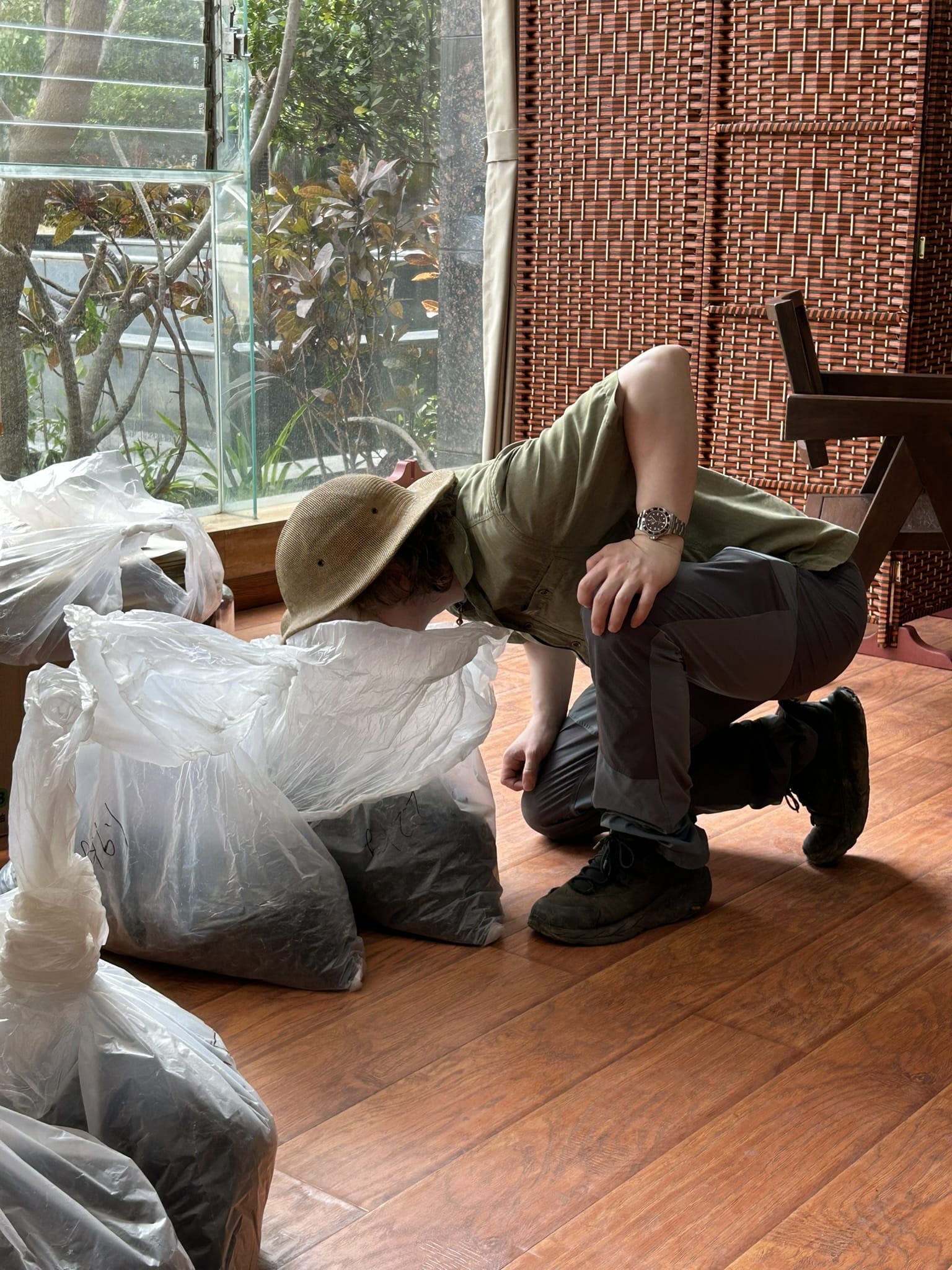
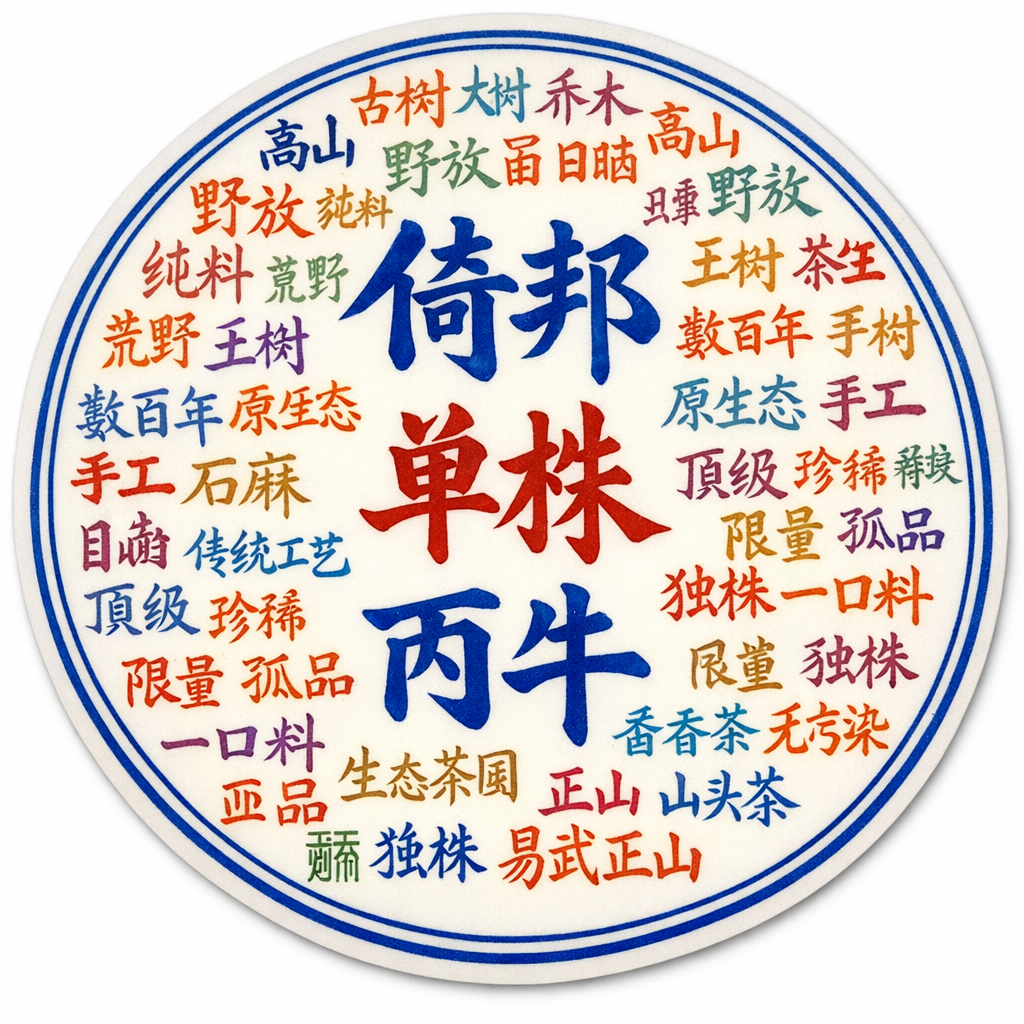
We’ve discussed before, in our trip reports and podcast episodes, that nearly all tea benefits from blending (narrowly defined; select-tree or single-garden mix pick blends; there is nuance here), with rarefied exceptions for Laocong Dancong and select few gushu pu’er trees. These teas were expensive, from a famous region, and we don’t doubt their gushu forest provenance; as danzhu, they were priced above what a similar single-garden gushu blended tea would have cost. Perhaps someone less experienced, less perceptive, or more motivated by price and brand would have enjoyed them. This experience was indicative of the post-modern trend, where the majority of danzhu pu’er is commissioned without deep knowledge of the selected tree, as a luxury good for conspicuous consumption, as something to show off to your cultured friends. That’s why I labeled my own special commission Yibang Danzhu with all the claims, so everyone knows how special it is and no one doubts my street cred:
Anyway, scoring the best tree in a single-garden-10-tree-danzhu tasting 4 out of 7 points[11] was a very educational disappointment. These teas were not bad: 4/7 is better than many teas we suffer through, and most merchants buy a few of these danzhu batches with the intent to blend; yet this tea would have been better served with blending at the start of processing, to equilibrate the withering, shaqing, rolling, and drying, forming a more integrated and uniform whole. Even with post-production blending, I do not believe that tea will reach its full potential. The confluence of modernism in the forest, production, and market created an opportunity for this farmer to put in more work for a lesser product, in order to make more money. That’s some bitter tea for him and some good education for us: tasting the minute variations across a garden and understanding how the sum of the parts is greater than the individual components is not something that would have been easily done outside of this context. We learn a lot on these trips.
Culture Clash
Menghai’s market-driven culture diverges from that of Yiwu, where legacy ethnic Han farming families and négociants are more likely to have strong opinions on the “right way” to process their tea, produce tea to their own standards ahead of commissions, and promote specific ideals of flavor they believe to be indicative of terroir and quality. Many of these farming families in Yiwu maintain libraries of their past production, holding onto stocks of tea across seasons and years, for purchase and sampling with merchants and laobans. What is the cause of this stark cultural difference?
The up-mountain gushu tea cultivators in Menghai with land ownership or harvesting rights are predominantly ethnic minorities, with little Han ownership of tea lands; this contrasts with Yiwu where intensive Han in-migration was supported by the ethnic-Han Tusi of Yibang during the Yongzheng through Qianlong eras (after which a self-supporting population was bolstered by a trickle of continued in-migration). In 1728 CE, the Yongzheng government instituted a policy of government reform attempting to replace Dai chieftains with ethnic-Han imperial bureaucrats (改土归流, "replacing native chieftains with regular bureaucrats"); the overall initiative was only partially successful, and abandoned after revolts by various ethnic groups led to the expulsion of the imposed administrators. The majority of the Yiwu tea mountains were already under Han influence, and the failed reform resulted in the recognition and imperial support of the Cao family as the Tusi of Yibang (controlling 5 of the 6 famous tea mountains of Yiwu) in 1729 CE, the only ethnic-Han Tusi in Xishuangbanna.
Tea from Xishuangbanna achieved tribute status through the actions of the Cao Clan; after receiving imperial recognition, the Tusi of Yibang sent the first batch of tribute tea as a gift to the Yongzheng emperor in 1729 CE. Despite the increase in prestige, tea production cratered under the tea monopoly imposed as part of the failed government reform; it was revoked in 1734 CE, converting the trade of tea to private industry in 1735 CE. The government’s renewed support of private trade and the tea’s sustained status as imperial tribute created an economic opportunity that drew sustained Han migration into the mountains[12]. Tens of thousands of Han migrants settled in the Six Famous Tea Mountains, developing and managing private tea gardens producing tribute and commercial proto-pu’er; the majority of these migrants originated from Shiping County (石屏县), Honghe Prefecture, in south-central Yunnan, northeast of the Xishuangbanna region[13]. These Han settlers significantly increased the acreage of planted tea across the Yiwu region, adding tens of thousands of mu of mixed tea-forest lands under cultivation; by the late Qianlong period, the Yiwu region supported the Han villages of Mahei (central before Yiwu town), Luoshuidong, Manxui, Sanheshe, and Yibi; Yibang town was Han dominant until its decline in the mid-to-late 1800s from a succession of attacks by Youle mountain villagers, a fire in the old town, and the Hui-Han wars, after which Mahei and Yiwu-town arose as the regional trading centers[14].
The Han of Yiwu engaged in a multi-generational project of civilizing the Yiwu frontier, engaging in the merchant-scholar tradition, educating their sons for the imperial examination, and building the infrastructure of roads, bridges, and guild halls necessary for the trade of Xishuangbanna tea at scale. Shiping itself had a strong literati tradition and a reputation for scholarship, naming itself the “prefecture of letters in southern Yunnan” (学南滇第一州); many of the Shiping migrant families maintained a tradition of 士商 (shishang)[15], in which examination preparation and long-distance trade are pursued within the same family by various sons, contributing to the success of the clan. The practice of keeping samples of each production, catalogued with region, vintage, and production notes, is a direct cultural inheritance of the merchant-scholar intellectual tradition. Contra the argument that globalization and external influence of Taiwanese traders created the intellectual frame of connoisseurship amongst upland tea makers, the indigenous ethnic minority groups throughout Xishuangbanna, many of whom interacted with outsider merchants decades before interest returned to Yiwu, did not and have not adopted literati-scholar practices of written notes, back-catalogues of vintages, and re-tasting vertical sets of prior years’ productions. These scholarly practices remain concentrated amongst the legacy tea making families inheriting the merchant-scholar traditions of their ancestors. This is evidenced by the lack of such literati practices in the non-Han villages of Yiwu: Guafengzhai (刮风寨), Yao Dingjiazhai (丁家寨/瑶族), Jiumiao (旧庙), Luode (倮德), and Wanggong, for example, are all ethnic Yao villages prized for their remoteness that do not share in the scholar-merchant tradition. As these remote Yao regions have gained sustained prominence in the post-2006 single-origin forest-gushu era, they have developed in ways more similar to Menghai than to old-Yiwu, and often not for the best: many of these villages are market focused and have sacrificed long-term quality for short-term profit, for example, illegally clearing forest lands to plant tea in its place.
Juxtaposing Yiwu’s merchant-scholars and their lingering legacies in the region’s contemporary market structure, the modern Menghai market markedly mimics the frontier trading system from which it originated. Pre-modern monopsonizing merchants purchased the entire harvest of a village’s tea each season, leaving farming families with little to no tea of their own production; modern Menghai farming families strive to sell out of their tea by the end of every season, selling good tea at a discount if any remains post-season. There is no history or culture of cataloging, reserving, and re-tasting tea over time in the up-mountain villages of Menghai, and nearly all of the farmers we visited (and some of the merchants!) lacked cakes or samples of any previous year’s production – retaining nothing for comparison or study[16]. To an extent, the market has never rewarded Menghai farmers for a backlog of vintage tea. Prices fluctuate year to year, and it’s assumed that the best tea is purchased by merchants as pre-order or during the production season and only sub-standard tea remains unsold.
For the most part, the tea farmers in Menghai have less interest in the overall scholarship of pu’er tea, and less interest in developing their own evidence-based opinions on processing parameters and quality differentiation. As a family industry, skill levels, attention to detail, understanding of the finished product, and marketing skills all vary by individual and household. Certain families have become true “tea people” in the Han-coded Confucian-scholar tradition, while others remain less interested in the attributes of the final product as long as it’s good enough to sell. In the same vein, tea farmers in Menghai are, in general, more cloistered in their range of tasting experiences: very few tea makers in Menghai have experience tasting teas from other producers, and across villages, mountains, or regions, making comparisons more difficult to contrast and discuss[17]. The production of pu’er tea in Menghai is more market-driven, more commoditized than in Yiwu, even at the very highest end: there are real charen scattered through the mountains making amazing tea across the region, but everywhere we went in Menghai felt especially keen on doing exactly what the laoban wants. There was little in the way of “standard” production practices or even opinions on the best way to coarse process their own tea, even in the most expensive, sought-after, and prized gardens, including Laobanzhang.
Perhaps this is changing; the younger generation of ‘Banna locals are pushing against the traditional boundaries of agriculture, commerce, and social status: in more recent years, a small number of minority families long involved in the tea trade have ventured to open their own fine processing facilities (particularly former Dai middlemen families in Menghai), and a few have found success in selling tea to customers throughout greater China. Likewise, many Hani and Bulang people no longer rely on Dai intermediaries, instead selling directly to Han merchants or even creating consumer brands. Entrepreneurship amongst locals in Xishuangbanna has become slightly more common after the pu’er bubble and Chinese financial boom, with the rise of online video-driven commerce (抖音 and 小红书) allowing the young and savvy to market their branded tea directly from the tea fields[18]. We work with one local merchant who commissions tea made to her own specification, a young woman of Hani ethnicity with superb taste in tea and expert knowledge of various mountains; for a young local woman to build a business on her own expertise and ability to negotiate with farmers would have been unthinkable even a generation ago.
In the most developed markets, such as the Banzhang region villages, the locals have little need for Dai intermediaries today; Han merchants can easily find their way to the numbered houses managing their own harvest and processing. The number of Han merchants trading in the mountains grew in the early 2000s and greatly increased again post-2007; direct trade has abounded to the point where some farmers with access to the most sought-after forest tea limit their sales to longtime repeat buyers. Smaller, lesser known, villages in more remote regions may still see benefits from their relationship and support of Dai middlemen, and Han merchants without the ability to identify provenance and gushu material may still rely on these local contacts with expertise for sourcing. The pu’er market is modernizing, though it is still much more provincial than the staid standards of Longjing and the over-hyped carnival of Wuyi.
Post-Modern Marketing
The rise in entrepreneurship amongst the local people of Xishuangbanna coincided with China’s consumer turn to post-modernism and the search for authenticity. In recent years, as pu’er has become a fetishized middle-class affordable luxury product, many tea-makers have highlighted their indigenous ethnic roots and connection to the land as a form of marketing, for themselves and their tea. After the Taiwan- and Hong Kong-driven market boom of the 1990s, the provincial government of Yunnan and the local government of Menghai sought to reassert the prominence of local tea farmers and makers in the evaluation of pu’er, in place of external “expertise” driven by merchants. To do so, the idea of up-mountain ethnic minorities as the authentic inheritors of an ancient pu’er tea making tradition has been promoted by the Yunnan provincial and Xishuangbanna local governments, which have engaged in modern myth making by linking new products to ancient places and practices. The government and farmers together have constructed a tradition of the hyperreal, commoditized and ready to be sold. This isn’t necessarily good or bad, though it reveals that orientalism isn’t limited to the west looking east; membership in an indigenous ethnic minority does not naturally imbue one with skills in managing tea gardens or making tea, and even when the marketing is honest, the tea varies in quality.
From the commencement of privatization in the early 1990s, the renewed sense of place and the ideal of terroir converted a common market of blended leaf into a specialty market of “single-origin” provenance, not dissimilar to the specialization of wine or coffee; idealistically, each pu’er tea is tied to a place, granting the place a mystique and borrowing from it a claim of ancient provenance and authenticity. This is recent, post-modern history: after 1949 CE, Han merchants and their Dai intermediaries only began venturing back into the Menghai Mountains circa 2007 CE; the Bulang Mountain villages, such as Laobanzhang didn’t become prominent and desirable until the mid-2000s. In this post-modern era, the convergence of earlier privatization, the reemergence of gushu-forest tea, and minority-maker-marketing led to the rise of boutique single-origin productions, with village names functioning as brands carrying their own weight and value, independent of the maker’s name or tea brand. Consider: walking into a random tea shop in Shanghai or NYC, would you prefer an unspecified sheng pu’er cake of unknown origin or a Hekai / Pasha / Naka cake? Would you prefer a cake labeled Bulang to a cake labeled Banpen?
Contemporary consumers in the post-modern market desire single origin cakes of unmixed material to taste the true flavor of the place. So much ink has been spilled on the unique profiles of each mountain or each village that any aficionado could be forgiven for thinking themselves knowledgeable about such specificity when villages and gardens contain multitudes, flavor varies through the harvest season, processing varies by family and specifications set by the commissioning merchant; trusting your references is an assumption that the raw material wasn’t cut with the leaves from lesser trees or with cheaper material from less famous nearby villages, and that the merchant isn’t exaggerating the quality purposely or repeating fantastical claims accidentally. What makes you believe the tea you’ve tasted is representative of the mountain and garden and the trees it claims to be from?
Genetic Lineages in a Patchwork of Subregions
The Menghai region is composed of entirely separate mountain ranges, each with distinct macro-and-micro climates, yielding distinct flavor profiles, from lower-altitude Nannuo in the east bearing similarities to Yiwu, to the strong teas of Bulang in the south, the elegant high-altitude teas of Mengsong in the north, and the wild-tasting teas of Bada in the west. Each of these mountain ranges have distinctly contrasting flavor profiles and could be a “region” in their own right. Outside the taidicha plantations in the valleys and the low hills of Nannuo, most of Menghai’s tea is grown at higher elevation than Yiwu. While both regions have fractally complex terroir[19], I generally find Yiwu to be more contiguous in environment and, with the exception of small-leaf varietal areas (Yibang) or regions with high concentration of yesheng cultivars, more predictable in its flavor characteristics.
Over two decades of drinking sheng pu’er, I’ve found that most “Menghai” teas (of unspecified origins, or blends) on the western market taste predominantly of Bulang; the Bulang sub-region contains many of the most famous villages (the 5 villages of Banzhang and the larger Banzhang region villages), a few less famous forest-tea areas, and tens-of-thousands of acres of plantation tea. Bulang thus has the glorious distinction of producing some of the world’s most expensive pu’er and some of the world’s cheapest taidicha occasionally within walking distance from forest to plantation. Even within a mountain range, just as in Yiwu, variations upon variations exist; the Banzhang sub-subregion is composed of 5 villages (Xin Banzhang, Lao Banzhang, Bakanan, Bakalong, and Laoman'e[20]), each of which are composed of distinct gardens, most of which contain a mix of interspersed gushu and qiaomu; the tea from these gardens may be processed together (“mix pick”), separated into pure gushu, or the harvest of some “select trees” may be set aside if a laoban wants to pay for it (which they often do). In some villages such as Laoman‘e, the individual trees are known as bitter (苦茶) or sweet (甜茶), depending on the genetic lottery delt by seed grown trees. The bitter trees might be further divided by the intensity of the bitterness, with the most extreme bitter trees rarely picked, unless commissioned, and even then, most often used for blending. Bulang tea remains the dominant conception of Menghai, prevalent from its varied origins and as a primary component in most blends.
And yet – the pu’er tea from different regions and mountains and gardens and trees really do taste different; these differences are rooted, so to speak, in the age and genetics of the trees, the environment of the forest, and the practices of the local peoples. The idea of terroir, of flavor originating in the field and varying by region, arose in ancient China long before tea emerged as a medicine, temple practice, and luxury good by the Tang dynasty; food provenance was of great interest to pre-Tang gourmands.
The origin of cultivated tea remains unresolved, though Yunnan province remains the leading candidate: as an indigenous plant growing wildly across a vast range of provinces and countries[21], tea was likely independently cultivated by various groups through the course of prehistory[22]. Linguistic analysis of ethnic minority languages suggests tea likely originating in Sichuan or Yunnan, migrating west to east along the Yangzi River, and then spread south through Fujian and Guangdong[23]. Within Yunnan, Bulang and other minority groups have been harvesting leaves from the tea plant before the development of tea as a beverage, far predating the processing that leads to modern pu’er tea in the late Qing. Genetic testing analyzing the admixture of crossbreeding on tea bears evidence of multiple centers of origin, with Yunnan province maintaining the greatest level of genetic diversity across wild and domesticated species, far beyond that found in other regions. Wild tea is genetically and phenotypically complex, composed of at least 12 species each with multiple varieties; the varieties within each species may be a naturally occurring genetic line, a hybrid, or a domesticated variant[24]. As an outcome of this complexity, Yunnan’s tea trees often don’t correspond cleanly to the prevalent taxonomic classification systems: many varieties are taxonomically unstable, approximately even genetic crosses between two species, unknowingly categorized under one or both of the parent species; many prior species-level tea-plants have been reclassified as varieties after genetic testing revealed their hybrid origins. More confusing still, repeat genetic testing using different methods and materials frequently contradict each other, as teas that look morphologically similar often show large genetic differences. Historical taxonomic naming of cultivars based on morphology has thus not proven reliable.
Local people domesticated wild tea through repeat selective cultivation, propagating only the seeds of those plants with leaves suitable for consumption. As domesticated tea spread, it hybridized with indigenous wild types, the progeny of which were re-hybridized with the cultivated parent-type, reducing the proportion of wild-type genes in each subsequent generation (the process of introgression[25]); tracking the introgression of genes from indigenous related species into cultivated tea can thus illuminate the genetic history of each subspecies and cultivated variety. The earliest independent domesticated lines are identifiable from their lack of hybridization with other domesticated lineages, as later domesticated lineages are often the hybridization of two or more independently cultivated strains. The flavor variations found in pu’er thus tea originate in the field, reflecting unique genetic histories of natural propagation and human intervention. While nearly all Chinese tea is famously produced from the Camellia sinensis var. sinensis genetic line, pu’er is often said to be produced from the var. assamica line; an oversimplification of daye (大叶, “large leaf”) cultivar’s repeated independent domestication within China. While India’s domesticated large-leaf assamica and China’s domesticated large-leaf daye likely share a common ancestor, both lineages show notable independent markers of domestication and differentiated introgression of geographically separated indigenous wild tea. Contemporary assamica and daye show large genetic differences, including unique chloroplast DNA, confirming their independent genetic history[26].
Within the daye variety, regional differences abound. Reanalyzing the open data from a study by Miao-Miao Li et al., at the Kunming Institute of Botany, Chinese Academy of Sciences[27],using my own with sub-regional rather than administrative geo-coding, I find that Chinese daye tea plants cluster into three gene pools, corresponding to geographic distribution: Yiwu gushu[28] displays the highest level of genetic diversity and carries the least hybridization markers with wild-type pre-domesticated Camellia taliensis and Camellia crassicolumna. Menghai gushu tea predominantly clusters into an intermediary hybrid between Yiwu and Lincang gene pools, indicative of repeat hybridization between the two regions, moderately closer genetically to Lincang; 10% of such gushu were found to have taliensis genetic heritage, notably more prevalent than Yiwu. Lincang itself is composed of distinct clusters of tea genetics, varying in its level of introgression with taliensis and crassicolumna; the region’s tea is not a uniform genetic pool. Certain regions carry unique genetic lines closer to wild tea with cultivated tea as the introgressor; Bangwei tea is likely a line of taliensis or crassicolumna with sinensis as the repeat genetic cross, believed to be a transitional type between wild-and-cultivated speciation.
Genetic intervention occurred earlier in Yiwu than Menghai. In the Qing dynasty, Han expertise in plant-breeding and strain-selection was applied to new garden development throughout the up-mountain tea regions in Yiwu, leaving the strongest growing and best tasting tea plants un-harvested in certain years to induce seeding for new plantings. Hybridization between daye and China small-leaf varieties became more common in Han-controlled regions (centered around Yibang) as the new migrants planted cultivated seeds throughout the mountains, leading to a new introgression of small-leaf genetics into various geographically distinct lines of daye tea. Until recently, the exact nature of Yibang’s small-leaf cultivar tea was a source of contentious debate: various interested groups claimed pure Camellia sinensis var. sinensis (Sino) or Camellia sinensis var. assamica parentage. Recent germplasm research synthesis place both Yibang large-or-medium leaf and small-leaf tea cultivars predominantly in the assamica-daye family[29]. The unique geo-local genetics of Yibang’s small-leaf morphology is likely evidence of sinensis var. sinensis introgression into the pre-existing cultivated daye from seedstock imported and planted by these Han settlers during the Qing dynasty. There are various unsubstantiated claims that this tea is uniquely unsuited to aging, leading to its production as a Yunnan green when given as tribute to the Emperor; these claims are ahistorical and reverse the direction of causality: I have Yibang tea aging happily in my collection that taste great fresh – the Imperial Household consumed such teas fresh because there was no extant practice of aging Yunnan teas outside of southern Cantonese-controlled areas in the Qing dynasty. The genetic origin of small-leaf tea from Naka is likely similar to Yibang: a unique morphology of daye rather than an isolated population of sinensis in the high mountains of Menghai, though there is little available data to prove this.
In contrast, lowland Menghai saw later hybridization between daye and China small leaf beginning in the RoC era, as plantations were founded with common clonally propagated genetic stock. The very flavor of Menghai’s raw leaf material is a modified product of High Modernism, the result of ancient people cultivating tea that felt and tasted good, co-opted by mass-plantings of scientifically bred modern cultivars that hybridized with the geo-local population. Menghai’s qiaomu and plantation tea is less diverse, more consistently flavored, less likely to be seed grown, and more likely to bear hallmarks of sinensis small leaf introgression from the spread of small-leaf and scientifically derived hybridized daye plants that have been planted across the region. Within Menghai, the differences and similarities between pu’er teas from various terroirs overlap in many unexpected ways: plantation tea from across the Bulang mountains taste more similar to each other than two gushu gardens in neighboring villages; the small leaf tea of Menghai’s Naka is vaguely reminiscent of the small leaf tea of Yiwu’s Yibang, a whole region away; and the higher altitude teas of Naka and Pasha share yet a different set of similarities.
The marketing of yesheng (野生) “wild” tea was notably absent in Menghai, both as a concept and as a flavor-profile; this is in contrast to Yiwu, where acceptance of the “yesheng” flavor varies family-to-family, and is often marketed as a sign of quality and tree-age. The sentiment against wild tea is accepted as common knowledge in Menghai and Lincang, where taliensis is more prevalent, and more contentious in Yiwu, where the gene pool is more varied and most early hybridized wild tea is safe to drink. This difference in market-and-flavor dynamic rests on the way the wild-type genes controlling for flavor introgressed with the cultivated strains in each region and the resulting indigenous genetic stock, and the contrasting view on their suitability for consumption: the common refrain of poisonous wild tea (which I have publicly disputed in the past) is an oversimplification of a complex topic: while there are no poisonous varieties of Camellia sinensis, varieties of Camellia taliensis and other undomesticated Camellia species might occasionally carry toxic alkaloid profiles in concentrations achievable during standard infusions, and some Camellia transitional hybrids may inherit gradations of the same undesirable alkaloids[30]. Historically, certain transitional trees identified as “tea” by indigenous populations were known (or thought) to make people sick, and were thus warned against, leading to the overstatement of “poisonous wild tea”. Furthermore, like all marketing terms in the tea world, the “yesheng” label is abused via purposeful conflation between truly wild genetic introgression and tea trees that have gone feral in the national protected forest[31]. In my opinion, this is a relatively easy marketing claim to verify sensorily, as the yesheng wild-genetic flavor is rather unique and identifiable (and distinct from other phenotypes including purple leaf and purple bud which are occasionally marketed as yesheng). For teas marketed or sold as “yesheng”, the limited genetic testing results point to older introgression and selection of admixed landraces, not modern gardens full of first-generation wild hybrids. In any case, genetic testing of specific trees of interest to high-end tea drinkers are rare; often categorized by the flavor and feeling of the tea, which leaves room for wish-casting and myth-making by the buyer and seller respectively. The general terms for the various levels of “wild-type” flavor are 野生 (yesheng, “wild type”), 过渡型 (guoduxing, “transitional type”; this is a rarely used classification), 驯化 (xunhua, “domesticated”), and 栽培型 (zaipeixing, “cultivated type”), ranging from most to least “wild”. This classification, outside of scientific literature on pu’er, is phenotypic at best: describing the displayed morphology and gene expression affecting the flavor of the tea in combination with the plant’s environment; the actual level of wild-type gene introgression is generally unknown.
In summary, the ongoing human intervention in tea cultivation led to hybridization of cultivated tea and its wild relatives, cross-breeding within cultivated tea sub-species, and genetic introgression between varieties within sub-species, forming a complex network of genetics, phenotypes, and morphologies that belie a simple linear genetic line. The genetic evolution of Yunnan’s daye tea thus can’t be modeled as a lineage but as a cyclic network of hybridization and introgression. To a large extent, the Yiwu-Menghai genetic and resulting-flavor divide is stronger from an east-west geographic perspective than a wild-vs-cultivated perspective; the domesticated gene pool drew from diverse yet geographically distinct parent populations, driving genetic differences exacerbated only to a small extent by wild-tea hybridization. The ancient cultivated genetic populations of tea are still available as gushu leaf in both Yiwu and Menghai, though through the trials and tribulations of High Modernism, the post-modern market Menghai’s young plants are predominantly the progeny of genetically modern tea.
[1] The origin of Yibang small leaf cultivar is a source of contentious debate; the cultivar may have been introduced from Sichuan by Han immigrants and hybridized with the range of indigenous genetic stock, or it may originate from a spontaneous mutation of the indigenous Daye cultivar, selectively propagated after discovery with later natural hybridization in the fields. Recent genetic testing places Yibang small leaf tea predominantly in the assamica-daye family; this is discussed in more detail later in this trip report.
[2] I do not intend to argue here about the abuse of low-end plantation tea, sold as such or fraudulently marketed as superior material, is subject to. There is certainly low-end poorly processed material subject to excessive oxidation or a lack of shaigan or whatever other processing step you deem of critical importance – only these “mistakes” are not happening as such on the high end at a frequency that would affect the market or constitute an entire “new style” of processing.
[3] Mao (毛) in mao cha is the character for hair, though it does not refer to hairy tea or downy buds as is sometimes incorrectly proposed; instead, the character is rooted in an older etymological system, where things with fur or hair, such as livestock, were still in their raw state requiring processing. The character 毛 is used this way in numerous of examples: 毛坯 (rough blank of a metal cast), 毛料 (uncut stone or fabric), and 毛重 (gross weight; weight before deductions such as packaging), and etc.
[4] Thus many contemporary practitioners refer to this stage as loose pu’er (散茶, sancha; or 散普, sanpu); in practice: some level of microbiota inoculation occurred during the loose aging phase, a now-rare step in the production, transshipment, and warehousing process that made up an unrealized component of pu’er teas development. The inoculated tea was then activated during the steaming and compression steps, leading to the selection of specific fermentation agents. Today, most pu’er is steamed and pressed in the year of its production; it is as yet unclear what ramifications this poses for long-term aging.
[5] Mengting Zhang (張夢婷), 從土司領地到自治州: 國家與邊疆互動背景下西雙版納的社會變遷 (“From Domains of Tusi to an Autonomous Prefecture: The State-Frontier Interactions and the Social Transformation of Xishuangbanna”), PhD diss., Hong Kong Polytechnic University, 2021, 31–32, 79.
[6] Many were from the same network of Shiping Han merchants who had earlier immigrated to Yiwu; this later wave of immigration from Shiping to Menghai had looser connections to the tea trade and a few generations less experience in tea cultivation and processing than their Yiwu brethren.
[7] Ann Maxwell Hill, “Chinese Dominance of the Xishuangbanna Tea Trade: An Interregional Perspective,” Modern China 15, no. 3 (July 1989): 330–32.
[8] Many small producers also produced blended pu’er; the introduction of single-origin pu’er marked a change in production philosophy and market structure from the factory system. The definition of “single-origin” changed over time, becoming more specific from macro-region, mountain, sub-region, garden, and select trees.
[9] With specialized machines for withering, shaqing, rolling, de-clumping, sorting, and drying; there are also other specialized machines used by the larger factories for evenly cutting the whole leaf.
[10] This may be better phrased as “less than 12 hours”, as overnight withering for late-arriving harvest is common, though this implies a longer duration than is available, as overnight withering requires morning processing.
[11] We use a 7-point hedonic scale.
[12] 西川和孝. 18世紀末の雲南省普洱府漫撒における会館建立と茶園開発―石屏漢人移民の活動を中心として―. In周縁の文化交渉学シリーズ1『東アジアの茶飲文化と茶業』, edited by西村昌也, 147–162. Suita: Kansai Daigaku Bunka Kōshōgaku Kyōiku Kenkyū Kyoten [ICIS], 2011.
[13] A smaller number of Han migrants originated from Jiangxi and Sichuan.
[14] Note that the "seven villages and eight stockades" (七村八寨) often seen in marketing material was never a true administrative organization and that the exact list has varied with merchant and market influence.
[15] This is a bit of gloss; 士商 refers both to the process that degraded the difference between wealthy-educated merchants emulating the scholar lifestyle and the traditional scholar-class themselves, as well as the hybrid identity of those merchants and the scholar-officials engaging in trade. In this case, the merchants of Shiping were Shishang’ing and Yibang’ing, educating their sons, building infrastructure, collecting art, and making tea.
[16] Again – we experienced less of this in Yiwu, where many of the tea makers we worked with held stock from year to year, creating their own tasting library of teas of certain vintages from certain places.
[17] This is in contrast to Yiwu, where many of the legacy family heads are friendly and often drink each other’s teas; many also act as farmer-négociants, purchasing leaf-material as needed from other farming families. We found most Yiwu tea makers to have very clear ideas about tea from each sub-region, versus Menghai tea makers who seemed to only be familiar with their own production.
[18] A practice that has prompted its own restrictions after backlash; outsiders are now not allowed to stream from most of the tea forest lands by prefectorial rules.
[19] As discussed in last year’s trip report[LINK].
[20] Laoman’e tea is quite distinct and arguably contrasting with the rest of Banzhang; many tea makers now blend “Banzhang region” tea instead of “Banzhang 5 village tea” so that they can substitute Banpen (and occasionally Hekai or Guangbie) in place of the contrasting Laoman’e leaf.
[21] India’s Assam province, and in the Chinese provinces of Yunnan, Sichuan, Guizhou, Guangxi, Guangdong, Fujian, and Hunan.
[22] 张文驹, 戎俊, 韦朝领, 高连明, and 陈家宽. "栽培茶树的驯化起源与传播." 生物多样性 26, no. 4 (2018) and Muditha K. Meegahakumbura et al., “Indications for Three Independent Domestication Events for the Tea Plant (Camellia sinensis (L.) O. Kuntze) and New Insights into the Origin of Tea Germplasm in China and India Revealed by Nuclear Microsatellites,” PLoS ONE 11, no. 5 (2016).
[23] Zhang Wenju et al. 2018 (ibid above) and 薛德炳, “茶的原始语音与茶在国内的传播” (“The Original Pronunciation of Tea and Its Spread within China”), 贵州茶叶, no. 4 (2015).
[24] This is a synthesis of Zhang Wenju et al. 2018 (ibid above), other citations, and the original work in this section.
[25] Hybridization with frequent backcrossing; distinct from natural gene flow between two evenly disbursed populations, instead occurring in hybrid zones or from human intervention.
[26] 张文驹, 戎俊, 韦朝领, 高连明, and 陈家宽. "栽培茶树的驯化起源与传播." 生物多样性 26, no. 4 (2018): 357-372.
[27] Li, Miao-Miao, Muditha K. Meegahakumbura, Moses C. Wambulwa, Kevin S. Burgess, Michael Möller, Zong-Fang Shen, De-Zhu Li, and Lian-Ming Gao. "Genetic analyses of ancient tea trees provide insights into the breeding history and dissemination of Chinese Assam tea (Camellia sinensis var. assamica)." Plant diversity 46, no. 2 (2024): 229-237. This paper suffers from its use of administrative labels for pu’er tree geo-locality coding, an overly rigid interpretation of probabilistic clustering with hard 80% cut-offs forcing continuous ancestry into "pure" and "admixed" categories (discarding nearly half the sampled populations into the latter), alongside a three-gene-pool structure favored over the simpler one selected by the paper's own model-selection test, and limited sample selection within regions (for example, using only a single sample of Mahei to represent Yiwu tea genetics, and clustering Pu’er city tea with Yiwu). I have thus used the paper’s open-source genetic data for my own improved analysis, presented here.
[28] Again, note that this is a classic Yiwu Mahei sample, a region not known and a sample not claimed to have any yesheng genetics.
[29] Liu Benying (刘本英), Sun Xuemei (孙雪梅), Song Weixi (宋维希), Jiang Huibing (蒋会兵), Yi Bing (矣兵), Duan Zhifen (段志芬), Ma Ling (马玲), Wang Yungang (汪云刚), and Sun Chengmian (孙承冕), “云南西双版纳古茶树的地理分布、多样性及其利用” (“Geographic Distribution, Diversity, and Utilization of Ancient Tea Trees in Xishuangbanna, Yunnan”), 中国农学通报 (Chinese Agricultural Science Bulletin) 26, no. 22 (2010): 344–349.
[30] This is a mix of indigenous knowledge, firsthand experience, and inferential synthesis; local peoples across greater China (not just Yunnan), often carry warnings about “wild tea”, and the Tea Technique editorial team has consumed some of this more questionable tea with objectionable results in Yunnan and Chaozhou, suffering deleterious effects separate and distinct from the effects of being poisoned by farm residue or pesticides (which we have also, unfortunately, experienced). The literature is mixed on this note – plausibly because studying toxicity in tea is… lets say, “unlikely” to be funded by industry or government at this time, and there is relatively little of this wild tea in circulation anyway; for the literature that does exist: Lan Zengquan (蓝增全), 盲目追捧野生茶不可取 (“Blind Pursuit of Wild Tea Is Inadvisable”), 光明日报, July 31, 2021, shows cell-toxicity from a wild-tea Ailao (Yunnan) sample (though note that this is an unpublished preliminary result… for reasons?); Xiao-Rong Yang et al., “Simultaneous Analysis of Purine Alkaloids and Catechins in Camellia sinensis, Camellia ptilophylla and Camellia assamica var. kucha by HPLC,” Food Chemistry 100, no. 3 (2007): 1132–36, doi:10.1016/j.foodchem.2005.11.021 and Wen Zeng et al., “Comparative Analysis of Purine Alkaloids and Main Quality Components of the Three Camellia Species in China,” Foods 11, no. 5 (2022): 627, doi:10.3390/foods11050627 together show high variance and unusual purine-alkaloid profiles between various cultivars of cultivated and wild type tea; and Wen Zeng et al., “Comparative Analysis of Purine Alkaloids and Main Quality Components of the Three *Camellia* Species in China,” Foods 11, no. 5 (2022): 627, doi:10.3390/foods11050627 shows that hybrids can inherit and exhibit the production of altered alkaloid profiles. In summary: I remain unconvinced that any wild tea is going to kill you from a single cup, though some may make you feel quite odd; I find it very plausible that high levels of consumption may do some long-term damage.
[31] I remain generally skeptical that there is any common Camellia species that is truly poisonous at brewing concentration.